Automation in Polymer Manufacturing Drew Crowds at the 2025 Global Polymer Summit
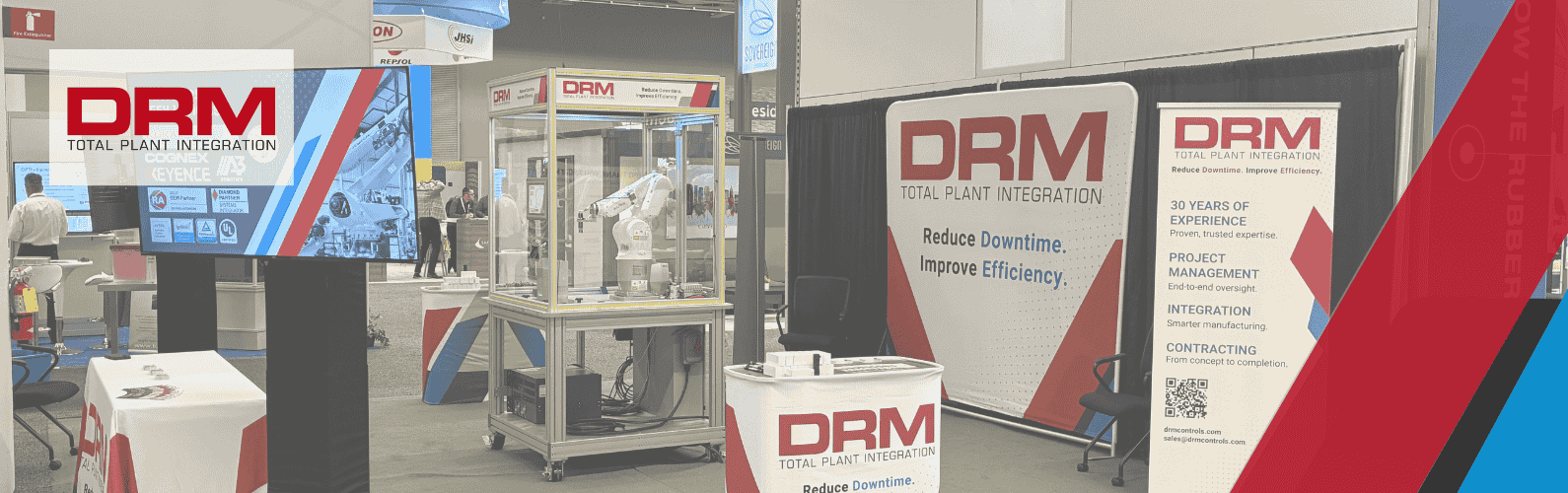
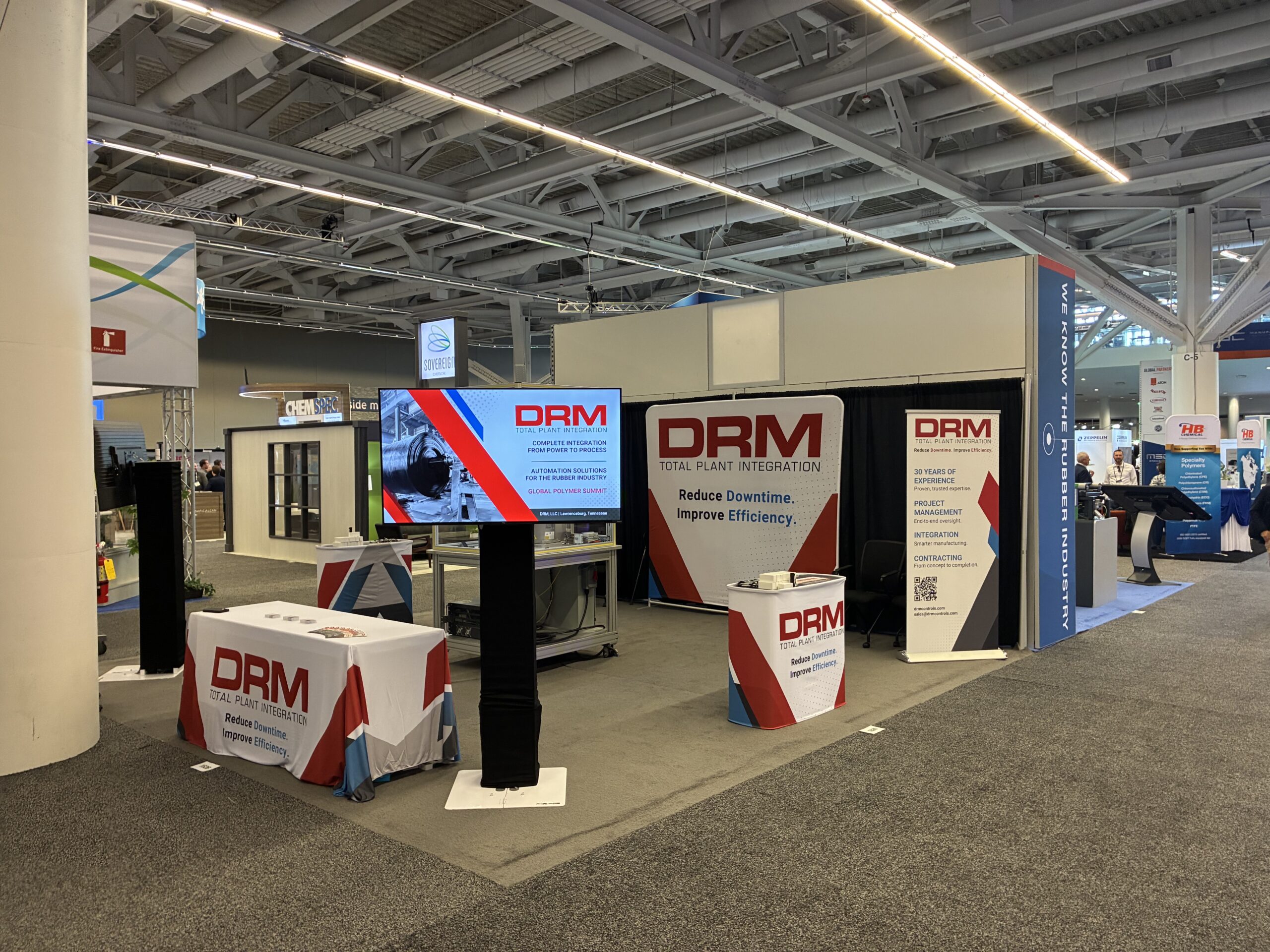
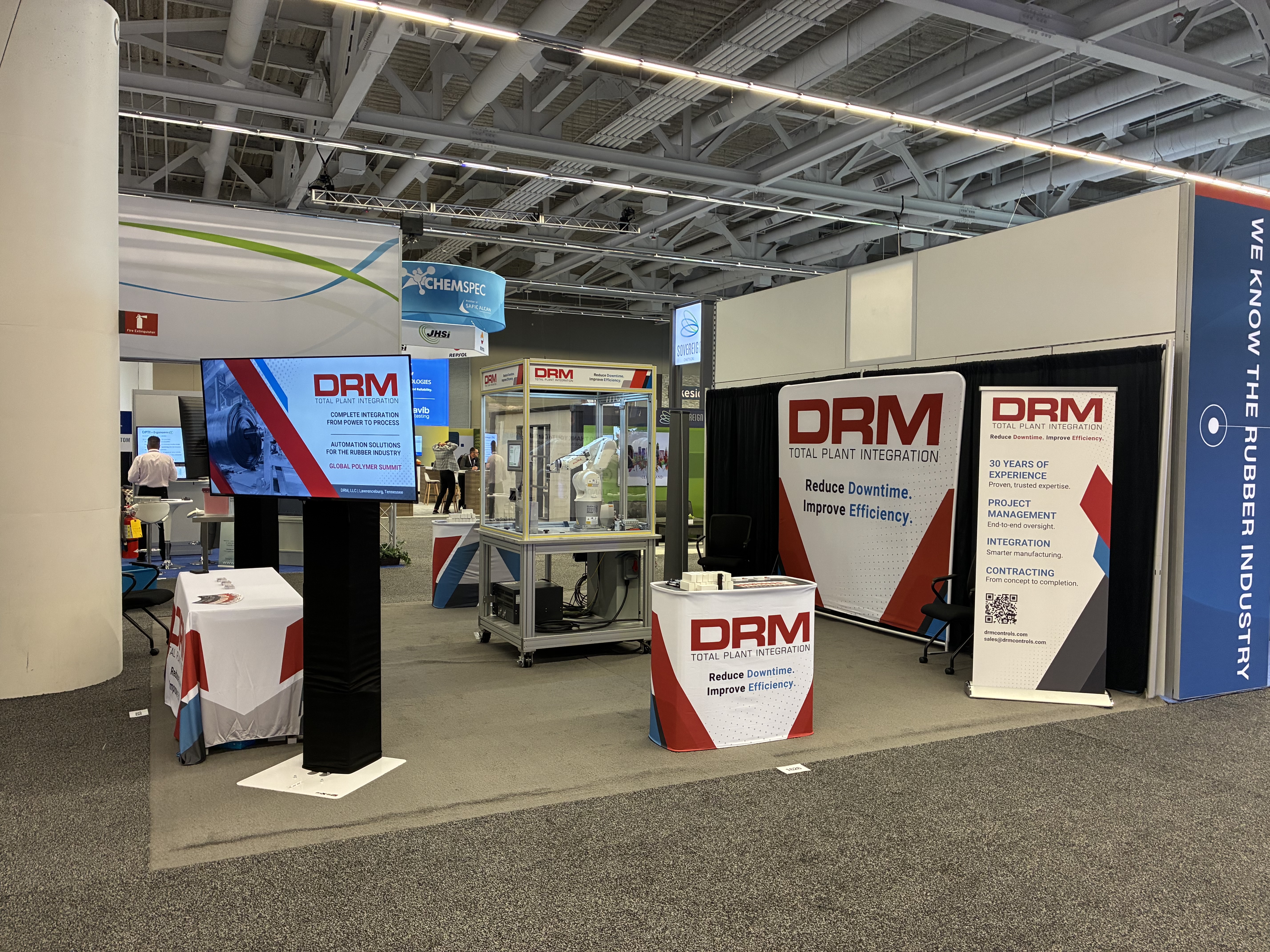
At the 2025 Global Polymer Summit, DRM showcased a small robotic cell that quickly became a catalyst for conversations about automation in polymer and rubber manufacturing.
The robot cycled through programmed joint and linear moves, catching the eye of passersby. Visitors could even press a button on the HMI to have the robot hand them a business card. It was a simple interaction, but it sparked curiosity and started conversations about how robotics could support real-world operations.
Themes from the Floor: Automation in Polymer Manufacturing Takes Center Stage
Two consistent themes emerged from discussions across the Summit:
- Automation is on the horizon. Many companies arrived knowing exactly which processes they wanted to automate. Molding and de-molding were the hot topics, with robots seen as a safer and more reliable way to handle parts.
- Old equipment needs attention. Some plants are still running mixers and calender lines installed a century ago. Leaders know modernization can’t wait, but few have the integration support to make it happen.
Notable Conversations
DRM connected with both large-scale manufacturers and smaller family-run operations. The company also reconnected with industry veterans. Across the board, the discussions centered on real challenges: how to improve throughput, reduce downtime, and integrate automation into existing processes
Why Modernization and Automation Are Top Priorities for Polymer Producers
Differentiation Matters
The robotic demo set DRM apart at the Summit. Few competitors offered live demonstrations, and for many attendees, it was their first exposure to robotics in polymer and rubber manufacturing. Conversations often turned to what makes DRM’s approach different:
- Integration from power to process. DRM takes responsibility for everything from incoming power and safety systems to controls and final production equipment, so the line operates as one system.
- Established vendor partnerships. Working with trusted suppliers ensures that automation platforms are reliable and maintainable long-term.
- A culture of ownership. Engineers focus on practical improvements such as shorter cycle times, better throughput, and safer operations rather than temporary workarounds.
Attendees appreciated seeing not just the technology in motion, but also how it ties into a broader approach to modernizing production.
Looking Ahead
The Summit reinforced the industry’s readiness for modernization and highlighted opportunities where DRM’s expertise can make an immediate impact. Building on this momentum, the demo cell will be enhanced with a simulated glass-handling and priming sequence for the upcoming Glass Build show.
“Events like this are valuable because they put us in front of manufacturers who are serious about making changes,” said Barry Brian, Partner at DRM. “The conversations we had at the Summit will translate into real opportunities to help companies modernize and gain efficiency, and that’s what drives our work.”
Key Takeaway
The 2025 Global Polymer Summit highlighted two realities in polymer and rubber manufacturing: automation is gaining traction, and aging equipment is driving urgency for upgrades. DRM’s expertise in full-line integration, from power to process, positions the company to address both challenges in a sector ready for change.