
Rubber Manufacturing Automation Solutions
Automation for the Rubber Industry
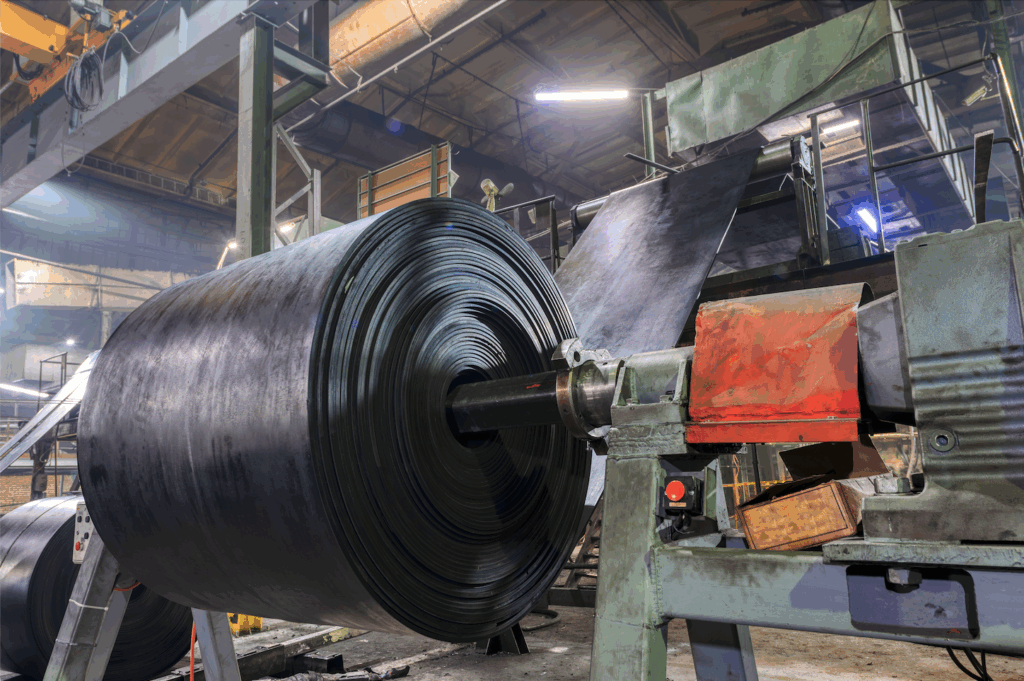
DRM designs, builds, and integrates automation systems for rubber manufacturing environments. From aging calender lines to robotic depalletizing, our systems are engineered for real-world durability and control, built to handle the heat, dust, and variability that define this sector.
Why Choose DRM for Rubber Automation?
- UL 508A panel design and TÜV-certified safety engineers
- Engineering relationships with FANUC, KUKA, and Rockwell Automation
- Full-line experience from power distribution to downstream handling
- Solutions validated in production environments
- Phased upgrades aligned with scheduled downtime
Comprehensive Rubber Automation Solutions
DRM provides complete integration for rubber manufacturing, from front-end control retrofits and drive upgrades to robotic depalletizing and recipe-driven roll control. The engineering team brings deep experience in hazardous-area panel design, conformal coating, and system architecture tailored to heat and dust-heavy applications.
DRM’s work spans upstream and downstream systems, including continuous improvement upgrades for legacy lines and new automation cells designed for long-term serviceability.
Our expertise includes:
- Calender line modernization
- Mixer and extruder control upgrades
- Autoclave Transfer and Shuttle systems
- Robotic depalletizing
- Safety system upgrades (OSHA-compliant)
- Custom end-of-arm tooling for rubber handling
- Data logging and recipe control systems
- Rubber bank monitoring system
Featured Project: Calender Line Modernization
A major roofing materials plant in Arkansas was operating on legacy PLCs, DC drives, and single-channel safety systems. DRM led a phased upgrade of the calender line, including reverse-engineered PLC logic, recipe-based roll setup, VFD motor integration, and a hydraulic autoclave bridge lift.
Results:
- Scrap reduced from 20 to 30% to under 10%
- Fewer shutdowns
- Improved safety and process consistency
Designing for the Full Line
Rubber automation doesn’t stop at mixers or motor tuning. Downstream processes introduce new constraints; from stack quality to banking detection and safety zoning. DRM’s approach addresses these challenges as interconnected systems, not isolated problems. For engineers seeking to understand how plant conditions and material properties shape automation decisions, this is the next level of design thinking.
For deeper insight into how material properties, plant environments, and safety requirements shape automation in rubber production, explore DRM’s technical brief on system design.
Rubber Industry Automation Applications
DRM’s automation systems are deployed in rubber manufacturing facilities across North America, supporting high-performance production in areas such as:
Rubber Block Depalletizing
Designed a robotic cell using a vacuum-based tool with foam compliance to handle 80 lb rubber blocks with variable geometry. Cycle time reduced by more than 50%: from 40+ seconds to 20 seconds.
Extruder Control Upgrade
Modernized an extrusion line by replacing legacy drives with new AC VFDs, integrating temperature control and streamlining HMI access for operators.
Pressure-Sensitive Roll Control
Replaced manual setups with automatic pressure adjustment using load cells and hydraulic actuation to improve sheet uniformity.
Mixer Controls Modernization
Converted relay-based mixer control systems to PLC-based platforms with HMI interface, adding recipe selection, safety interlocks, and event logging.
Hydraulic Lift Replacement
Replaced screw jack-based lift systems with hydraulic bridge lifts, reducing cycle time from five minutes to under one minute and improving safety.
Banking Detection System
Non-contact sensor system in development to monitor rubber bank between calender rolls, aimed at preventing mechanical damage.
Frequently Asked Questions About Rubber Automation
Q: What makes automation in rubber manufacturing more difficult than other industries?
A: Rubber plants often deal with high temperatures, sulfur, carbon black dust, aging infrastructure, and product variability. These conditions require rugged hardware, careful environmental prep, and deep process alignment to ensure system uptime and product consistency.
Q: Can DRM automate legacy lines without long shutdowns?
A: Yes. DRM has led phased upgrades using sprint-based methods that allow control, drive, and safety retrofits during scheduled downtime. Legacy code is reverse-engineered, and systems are staged for minimal disruption.
Q: What types of equipment has DRM automated in rubber plants?
A: Projects include calender lines, mixers, autoclaves, bridge lifts, and robotic handling of rubber blocks. DRM also develops custom systems like recipe-driven roll controls and non-contact banking detection tools.
Q: How does DRM ensure safety compliance in rubber environments?
A: TÜV-certified engineers conduct risk assessments and design dual-channel, OSHA-compliant safety architectures. Devices are selected for durability in dust-heavy conditions and integrated to reduce nuisance faults.
Q: Can DRM support automation beyond just equipment upgrades?
A: Yes. DRM enables data collection, recipe automation, and operator-friendly HMIs that provide long-term visibility and process control, helping teams continuously improve their operations.
Plan Your Next Rubber Automation Project
Rubber plants often delay upgrades until downtime or safety concerns force action, but the right upgrades can reduce scrap, improve safety, and prepare your line for future automation. DRM works with manufacturers to align system design with real plant constraints and production goals. Start the conversation today!